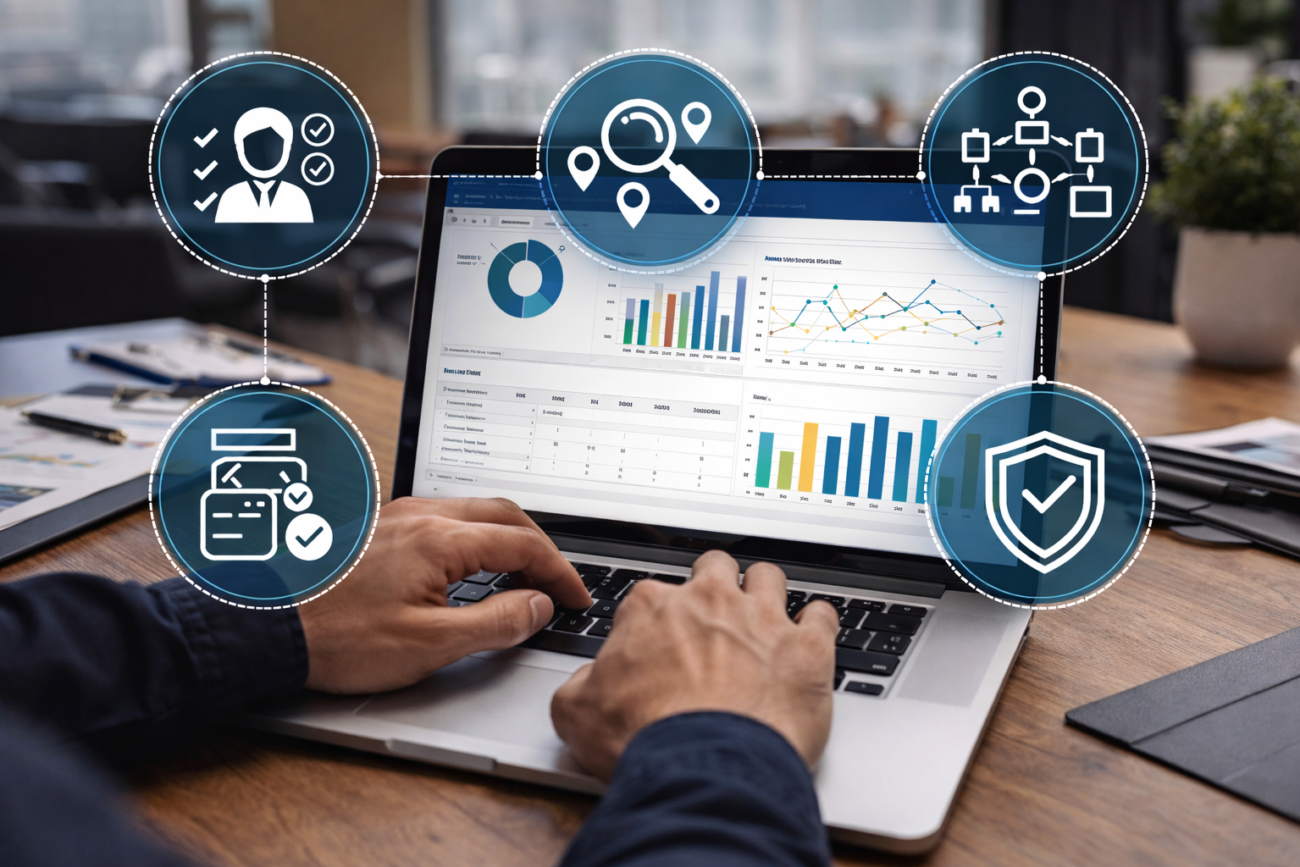
Effective asset management is crucial in today’s fast-paced business environment. The ability to monitor resources to make full use of them and use them efficiently is important for business. Fixed asset software is a strong tool that makes it easier to track and control assets. Knowing what to look for in software can make a huge difference in your business’s operations.
User-Friendly Interface
The user-friendly interface improves the overall experience and makes it easier for employees to use the software, even with minimal training. The visuals and features are clear and well-organized, which helps to minimize errors and enhance efficiency, allowing for greater focus on tasks.
Comprehensive Asset Tracking
Precision and accountability call for accurate asset tracking. Fixed asset software should provide you with end-to-end tracking of the asset’s lifecycle, from purchase to retirement. By covering every aspect of the asset’s lifecycle, this approach allows businesses to have a clear and accurate record of their assets, which can help them make informed decisions based on the latest information. This can also help to optimize resource utilization, as businesses can identify which assets are being used most effectively and adjust their strategies accordingly.
Automated Depreciation Calculation
Errors can occur in manual depreciation calculations. An automated system helps save time and increase the accuracy of the method, such as straight line or declining balance. The flexibility means that accounting principles are adhered to while also giving businesses the option to use a method that is most suitable for them.
Customizable Reporting
Each organization’s reporting needs are different. The fixed asset management software should include diverse customization options for reporting, allowing users to create reports as per their requirements. Through comprehensive and pertinent data, decisions are made more effectively, transparency and accountability are improved within departments and between departments.
Seamless Integration Capabilities
Seamless integration with other systems, like accounting and procurement, is crucial for ensuring data accuracy and reducing errors. Fixed asset management software must simplify processes, increase efficiency, and standardize business processes.
Audit Support
Making sure your business is ready for an audit can be overwhelming. This is made easier by fixed asset software that includes features for audits, like detailed logs and audit trails. These tools offer transparency, asset history tracking, compliance, and stakeholder and regulatory trust.
Robust Security and Access Control
Security of data is a key concern for organizations. Fixed asset software should have robust security features, including access control by role, to ensure that only authorized users can access and edit data. These are protections that minimize the chances of breach and cover sensitive information.
Remote Access
Accessibility from a distance, in today’s technologically enabled world, is a great advantage. Fixed asset management tools that are mobile allow employees to access the asset management system anytime, whether they’re filling in asset records or checking reports. This versatility allows seamless operations, regardless of location.
Scalability
Businesses grow, their needs grow. Fixed-asset software scales well to support growth in data volume and user count without impacting performance. When investing in a scalable solution the need to upgrade is reduced frequently, thus providing long-term benefits and efficiency. Scalable software can easily scale with the growth of your organization, making it a future-proof solution for expanding businesses. It guarantees easy incorporation of new equipment, users, and features into the system while maintaining existing business operations, which can save time and resources in the long run.
Cost-Effectiveness
The cost is an important consideration when choosing software. Businesses want all the features but there’s a need to not overlook the price tag. By measuring TOC, including purchase price, maintenance, and support, organizations can make informed financial decisions. Making the best use of software investments can optimize operations, minimize human effort, and save money in the long run.
Predictive Maintenance Insights
The advanced fixed asset software must have predictive maintenance capabilities. The software can analyze data and make predictions on possible equipment failures, reducing the risk of expensive downtime for businesses. Predictive insights enable predictive maintenance, which prolongs asset life and enhances operational efficiency.
It supports multiple languages and currencies
Fixed asset software should be multilingual and multirational for global businesses. This capability allows teams in various departments to operate the software efficiently while complying with the regulations in their respective regions. Multi-currency functionality simplifies accounting activities for assets bought or utilized abroad, to help establish a common working platform.
Conclusion
For fixed asset management software, make sure that you choose one that has a user-friendly interface, detailed tracking features, and automated calculations. Other features like customisable reporting, seamless integration, and audit support can prove useful in enhancing operations. Also, the software should be secure, scalable, and cost-effective. With these points in mind, companies can select a solution that improves asset management efficiency and helps them achieve long-term success.