The world of the internet is changing quickly. With passwords, it’s impossible to safeguard sensitive information. Criminals have perfected the art of taking credentials and hacking into security systems. That has resulted in an urgent need for secure and trusted authentication.
To safeguard their data and systems, businesses are using biometric security solutions. The software for facial recognition has emerged as the most important technology used in the current security environment. It offers a unique combination of security and effectiveness. It is impossible to lose or steal a face the way you would lose or steal passwords.
Facial Recognition Technology
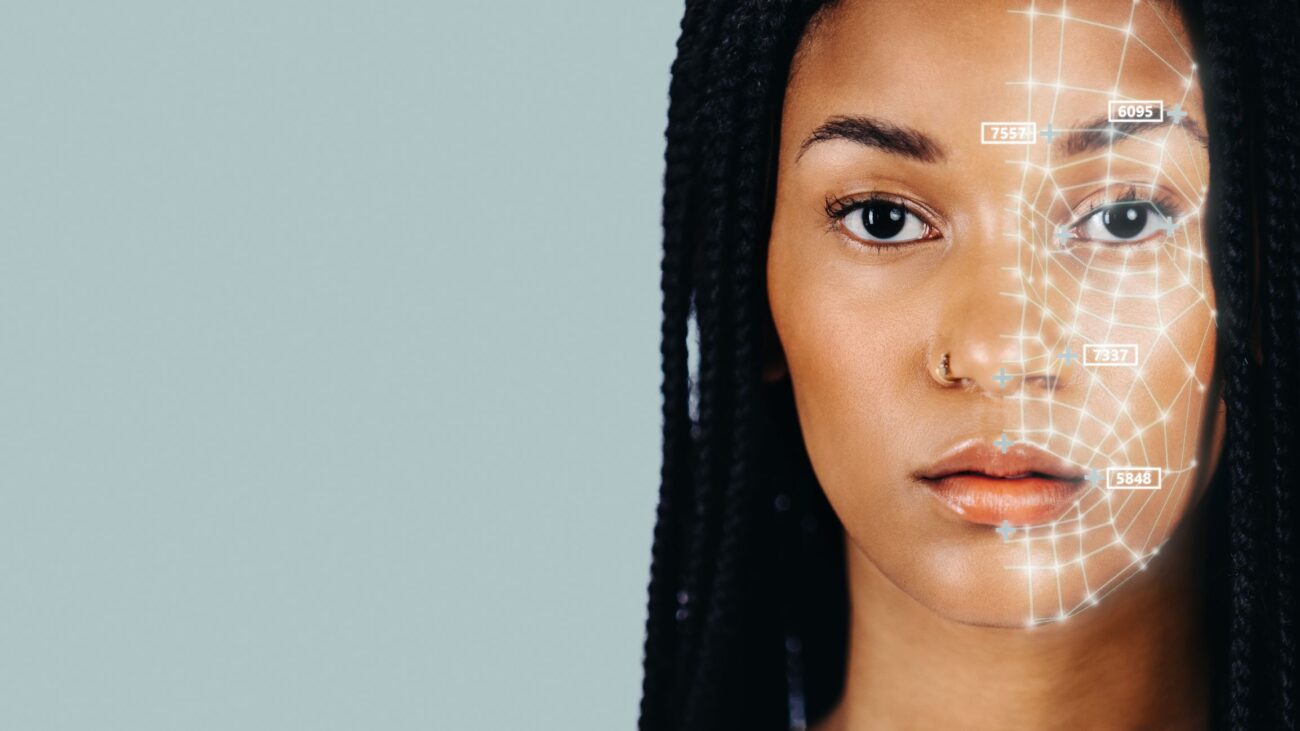
Face recognition technology is the process of mapping facial features. It is determined by the distance between the eyes, the shape, and the jawline. The measurements are then converted into a digital signature, also known as a facial signature or template. The template can be checked against a backup copy to verify the identity of an individual. This fundamental capability is what makes the face recognition program the most useful tool for cybersecurity.
Privacy-Preserving Architecture
One of the major developments in this area, which is a shift to privacy-preserving design, must be taken note of. The initial systems were designed to store biometric data on the cloud server centrally for processing. This has resulted in an unintentional honeypot of sensitive data that could easily be attained by attackers.
Age and Certification in the Regulated Industries
The user’s age is a crucial factor for businesses that deal with products that are restricted in age. Face recognition technology has been utilized to offer age verification. Utilizing advanced algorithms, it is now possible to determine the age of a person just by looking at facial features of the person with a high degree of accuracy.
Compliance and Certification
Facial recognition to be utilized in high-assurance applications, such as government or financial services, should be of high-quality. A digital identity framework that was developed by NIST. The National Institute of Standards and Technology (NIST) is described in the Special Publication 800-63. This model defines the level of security of identity verification (IAL) as well as authenticity (AAL).
Function of the Face Recognition Device
Image Capture
The device can take a photo of a person’s face using a camera. The most expensive devices include 3D depth mapping as well as infrared sensors. They are also sensors that can stop the spoofing attack. The infrared camera can’t be fooled by images made on paper. 3D depth cannot be replicated in video replays.
Face Detection and Alignment
The device recognizes the face in the photo captured. It does not consider the other components in the frame. Landmark detection follows. The system detects key areas like the corners of the eyes, the tips of the nose, and the jawlines.
Template Creation
The device transforms your visage into the mathematical model of biometric templates. It is not a photograph. It is not possible to trace the face of the original. A neural network is able to identify the distinctive features of the face shape. This is a one-way. By using the template, an attacker will not be able to duplicate the face.
Matching Process
The device will test the new template against the templates that are already stored. It is a one-to-one verification mode. The device is scanning all templates stored. If there is a match, it is determined based on the score of similarity. The system allows for the setting of a threshold that helps determine the right balance between security and convenience.
Conclusion
The future of cybersecurity that is password-free is here to stay, and biometrics in the future will be an alternative to passwords. KBA has a myriad of vices that should not be overlooked. Facial recognition software provides simple and secure biometrics and is an ideal alternative. The technology is evolving quickly. Face recognition will continue to be the foundation of modern security because it is likely to be the most efficient.